


Why Choose Ocala Tractor for Your Equipment Needs
Water in Your Fuel? How Florida's Humidity is Sneaking Into Your Tractor (and How to Fix It)
![[HERO] Water in Your Fuel? How Florida's Humidity is Sneaking Into Your Tractor (and How to Fix It)](https://cdn.marblism.com/UwANlzQhwIJ.webp)
Here at Ocala Tractor LLC, we've been helping Central Florida landowners keep their equipment running strong for years, and if there's one problem we see more than just about any other in our service department, it's water in the fuel. Living here in the Sunshine State has plenty of advantages, but our year-round humidity can wreak havoc on your tractor's fuel system if you're not careful. The good news is that once you understand what's happening and why, you can take some simple steps to protect your investment.
Whether you're running a compact tractor on a few acres or managing a full-scale farming operation with one of our TYM, New Holland, or Massey Ferguson tractors, water contamination doesn't discriminate. Let's walk through exactly how Florida's humidity sneaks water into your fuel tank, what symptoms to watch for, and most importantly, how to fix it and prevent it from happening again.
Why Florida's Humidity is Your Fuel Tank's Worst Enemy
You might be wondering how water gets into a sealed fuel tank in the first place. The answer lies in basic science and Florida's notoriously muggy climate. Every fuel tank contains air, and that air is loaded with moisture when you live somewhere as humid as Ocala or the surrounding areas. When temperatures drop at night or during a sudden afternoon thunderstorm, that warm, moisture-laden air inside your tank cools down rapidly.
As the air cools, it reaches what's called the dew point, and that's when water vapor condenses into actual liquid droplets on the cool metal surfaces inside your tank and fuel lines. Over time, these tiny droplets accumulate and settle to the bottom of your tank, where they mix with your diesel fuel. It's the same process that puts dew on your grass in the morning, except it's happening inside your tractor's fuel system.

The more empty space you have in your fuel tank, the more air there is to hold moisture, and the more condensation you'll get. That's why keeping your tank full is one of the simplest and most effective preventive measures you can take. Our service technicians recommend this to every customer, especially during Florida's hot, humid summer months when the problem is at its worst.
Spotting the Warning Signs: Symptoms of Water in Your Fuel
Water and diesel fuel don't mix well, and when water gets into your fuel system, your tractor will let you know. The challenge is recognizing the symptoms early before you're dealing with expensive repairs. Here's what to watch for when you're out working your land.
Your engine might start sputtering or running rough, especially under load. You'll notice a significant loss of power when you're pulling implements or climbing hills. Hard starting is another telltale sign, particularly first thing in the morning. Some folks notice white or grayish smoke coming from the exhaust, which is different from the black smoke you might see from other fuel issues.
If you're experiencing any of these symptoms with your compact tractor in Florida, water contamination should be high on your list of suspects. The sooner you address it, the better, because water sitting in your fuel system creates additional problems beyond just poor performance.
The Hidden Damage: Why Water is More Than Just a Performance Problem
Water in your fuel does more than make your tractor run poorly. It's actively damaging your fuel system while it sits there. Water is heavier than diesel, so it settles to the bottom of your tank and fuel filters. During our occasional cold snaps here in Central Florida, that water can actually freeze in your fuel lines, blocking fuel flow completely.
But here's the real problem that our service team at Ocala Tractor sees all too often: water creates the perfect breeding ground for bacteria and microbes that feed on diesel fuel. These microbes form a slimy substance that clogs filters and fuel lines. When they die off, they create acids that accelerate corrosion and rust formation on metal fuel system components.
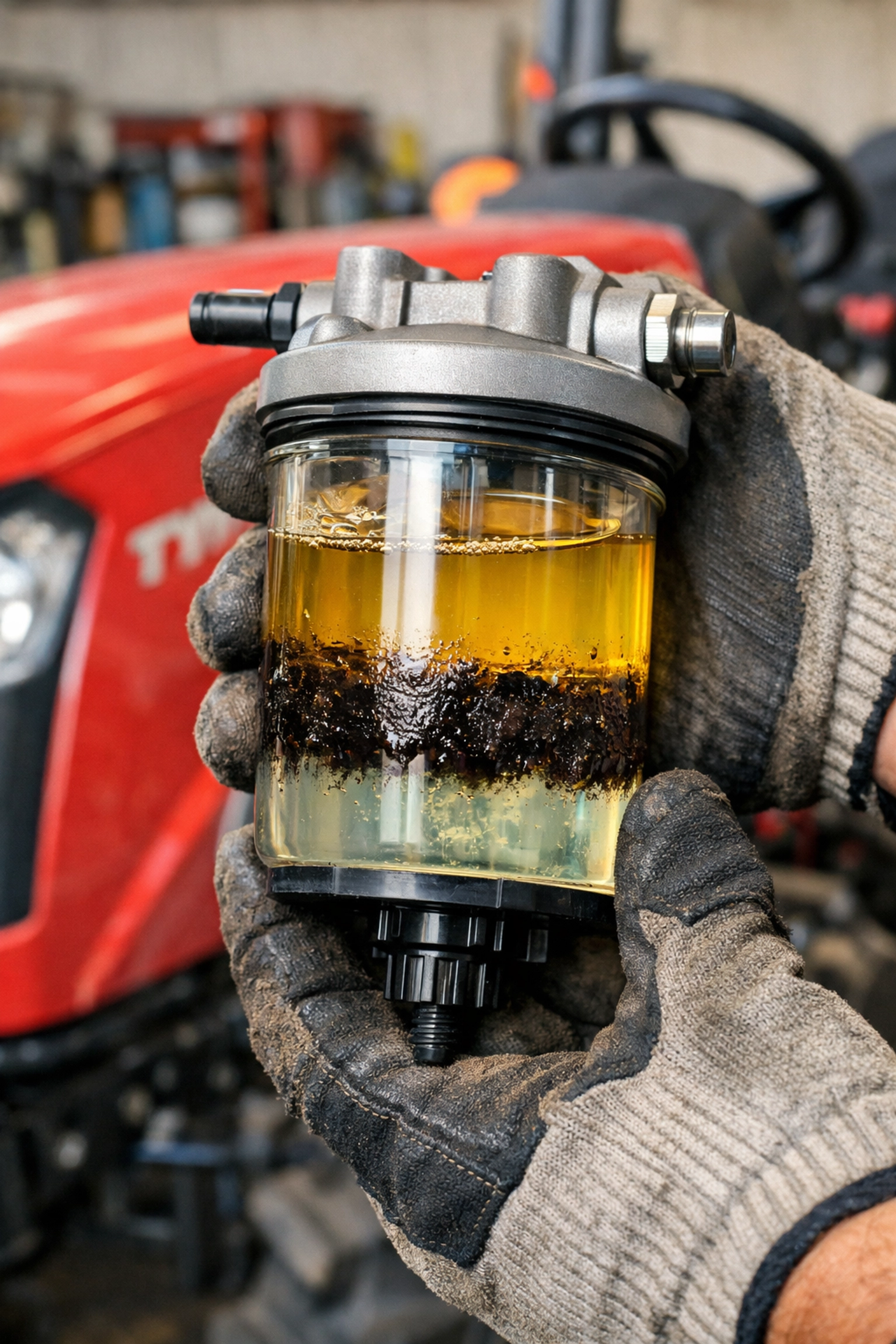
Modern diesel engines, especially those in newer TYM and New Holland tractors, have precision fuel injection systems that are particularly vulnerable to water damage. The Tier-4 compliant engines that meet current emissions standards have incredibly tight tolerances in their injectors, and even small amounts of water contamination can cause serious damage. We've seen fuel system repairs that could have been prevented with some basic maintenance and awareness.
How to Fix Water in Your Fuel: Immediate Actions
If you suspect you've got water in your fuel, don't panic. There are several steps you can take right away to address the problem. The first thing you should do is check and drain your water separator. Most modern tractors, including all the new inventory we carry here at the dealership, have water separators built into their fuel filter systems. These are specifically designed to catch water before it reaches your engine.
You'll find a small drain valve at the bottom of the fuel filter assembly. Get yourself a container, open that valve, and let any accumulated water drain out. You'll see it come out first because water is heavier than fuel. Make this part of your regular maintenance routine, especially during humid months. Check it before each use if you're in a particularly humid area or if your tractor sits unused for extended periods.
Using quality fuel additives designed for diesel engines can help too. These additives contain demulsifiers that separate water from fuel and biocides that prevent microbial growth. We stock several options here at our parts department and our knowledgeable staff can recommend the right product for your specific situation. Just be careful not to overuse anti-gel products, as too much can actually cause gelling problems of their own.
If you've got significant water accumulation, you might need to drain some fuel from the bottom of your tank using an electric fuel pump or siphon. This is best done when it's warm outside and the water is in liquid form. If you're not comfortable doing this yourself, give us a call at our service department. We're happy to help you get your equipment back in proper working order.
Prevention: Keeping Water Out of Your Fuel System
As with most equipment problems, prevention is far easier and cheaper than repair. The single most effective thing you can do is keep your fuel tank as full as possible. A full tank means less air space, which means less moisture, which means less condensation. Try to top off your tank after each use, especially if you know the tractor will be sitting for a while.
Proper storage makes a huge difference too. If possible, keep your tractor under a roof or at least a good quality cover. This protects it from rain, but more importantly, it reduces the temperature swings that cause condensation. Even a simple pole barn or equipment shed can significantly reduce moisture problems.
Regular maintenance is absolutely critical. Change your fuel filters on the schedule recommended in your owner's manual. Inspect your fuel lines for cracks, leaks, or damage that could allow moisture to enter the system. Check your fuel tank cap to make sure it's sealing properly. These simple inspections take just a few minutes but can save you from major headaches down the road.
For those of you with bulk fuel storage tanks on your property, make sure your tank is in good condition with no cracks or rust that could let rainwater in. Position your suction pipe about an inch or more above the bottom of the tank so you're not pulling water directly into your fuel system. We've seen this simple detail make a world of difference for our customers managing larger operations.
Why Choose Ocala Tractor for Your Equipment Needs
Whether you're in the market for tractors for sale or you need expert service on your current equipment, we're here to serve you. As a family-owned tractor dealer in Florida, we understand the unique challenges that come with operating equipment in our climate. Our service technicians have seen just about every humidity-related issue you can imagine, and they know exactly how to diagnose and fix these problems quickly and effectively.
We carry a full line of TYM, New Holland, and Massey Ferguson tractors, along with used tractors for sale that have been thoroughly inspected by our team. Every piece of equipment that leaves our lot gets the attention it deserves, and we make sure our customers understand proper maintenance from day one. Meeting your needs is our top priority, and we pay close attention to the interests of each customer who walks through our door.
If you're dealing with fuel system issues or just want to talk about the best compact tractors in Florida for your specific needs, stop by our dealership or give our service team a call. We're convinced that once you experience the friendly, knowledgeable service that's second to none, you'll understand why so many Central Florida landowners trust us with their equipment needs. Hard work and excellent customer service are the foundation of everything we do here, and you'll be glad you chose to work with a team that genuinely cares about keeping your equipment running right.